

Not maliciously — just incompletely.
Every month, most supply chain teams open an aging report and feel a familiar dread.
A column of inventory sitting beyond 180 days. Red numbers. Management questions.
Pressure to sell, discount, or scrap.
I get it. I have sat in those rooms.
But after multiple implementations of Demand Driven methodologies across manufacturing environments,
one reality becomes clear:
Stock aging is a time-based metric in a demand-based world.
It tells you how long inventory has been sitting — but nothing about whether it should be.
The Question Aging Reports Never Ask
An aging report measures a single variable: days since receipt.
That is useful context — but it answers the wrong question.
- Is this stock inside a strategically sized buffer protecting customer service?
- What is the Net Flow Position relative to the Top of Green?
- If we remove this stock today, what happens in 30 days?
What the Data Actually Showed
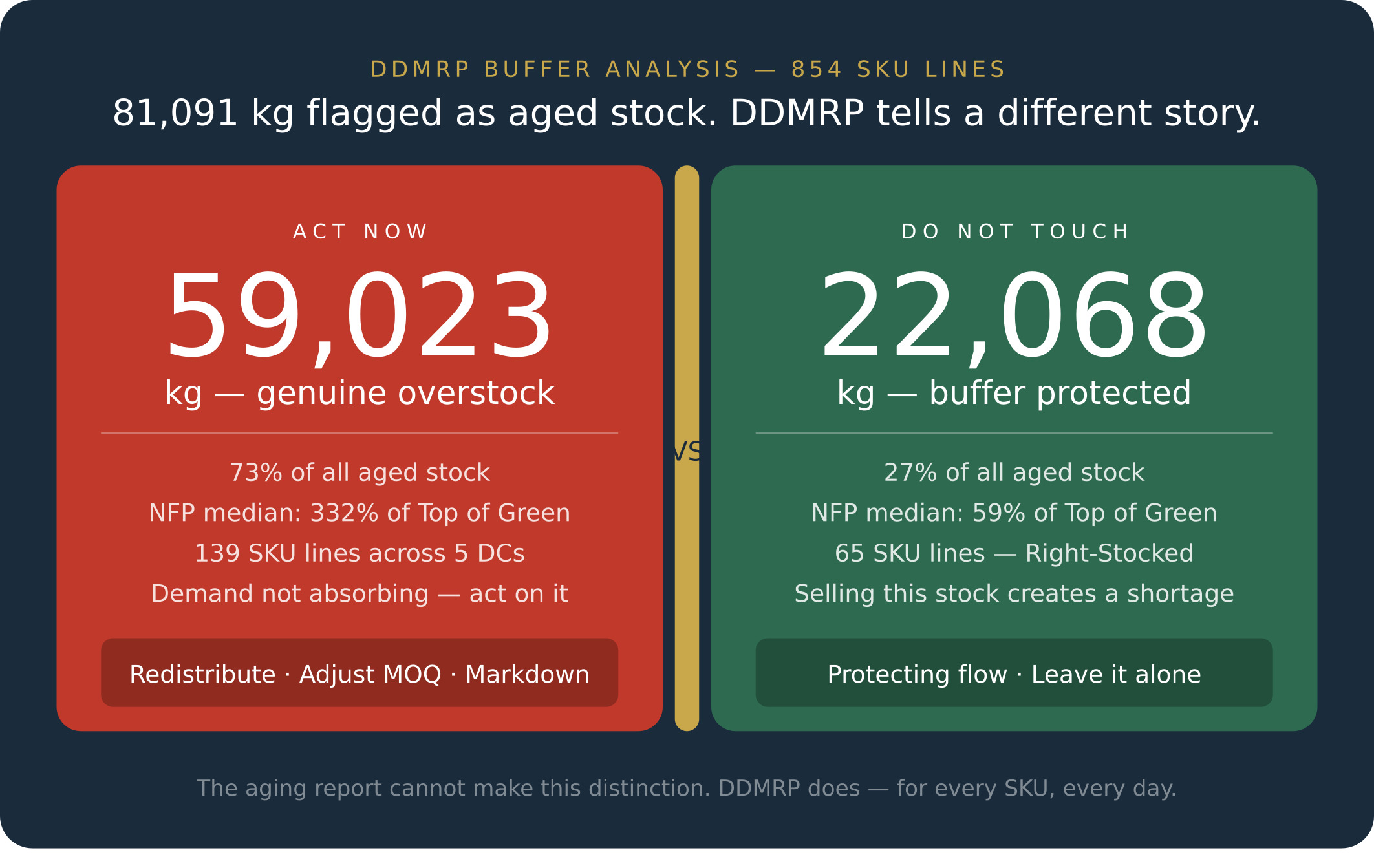
A recent DDMRP buffer analysis across 854 SKU lines revealed:
- 81 tons flagged as aged
- Across Aluminium, Brass, Copper, and Cast Iron categories
DDMRP Interpretation
59 tons — Genuine Overstock
- Median Net Flow Position: 332% of Top of Green
- Demand is not absorbing the stock
22 tons — Buffer-Protected (Do Not Touch)
- 65 SKU lines
- Median Net Flow Position: 59% of Top of Green
One aging report. Two completely opposite actions.
The Scenario That Repeats Itself
A 4-ton position of Aluminium Sheet sits for over 180 days. The aging report flags it.
The instinct is to move it.
- Net Flow Position: 43% of Top of Green
- Average Daily Usage: 43 kg/day
- 47 days of cover remaining
Remove it, and within weeks you create a stockout on a high-throughput item.
What DDMRP Changes
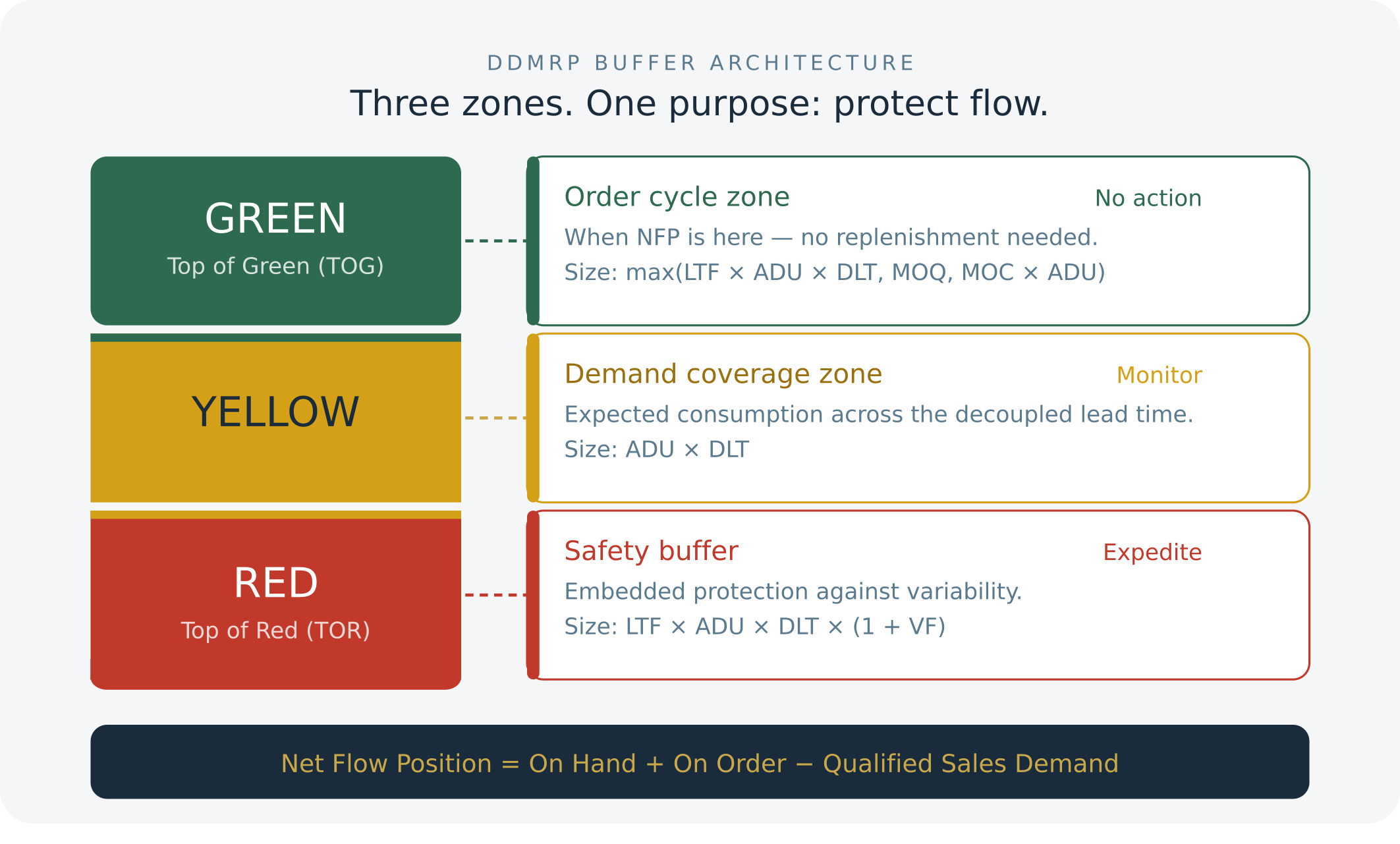
DDMRP reframes inventory decisions around demand signals, not time.
- Green Zone: order frequency
- Yellow Zone: demand coverage
- Red Zone: safety buffer
The Mindset Shift
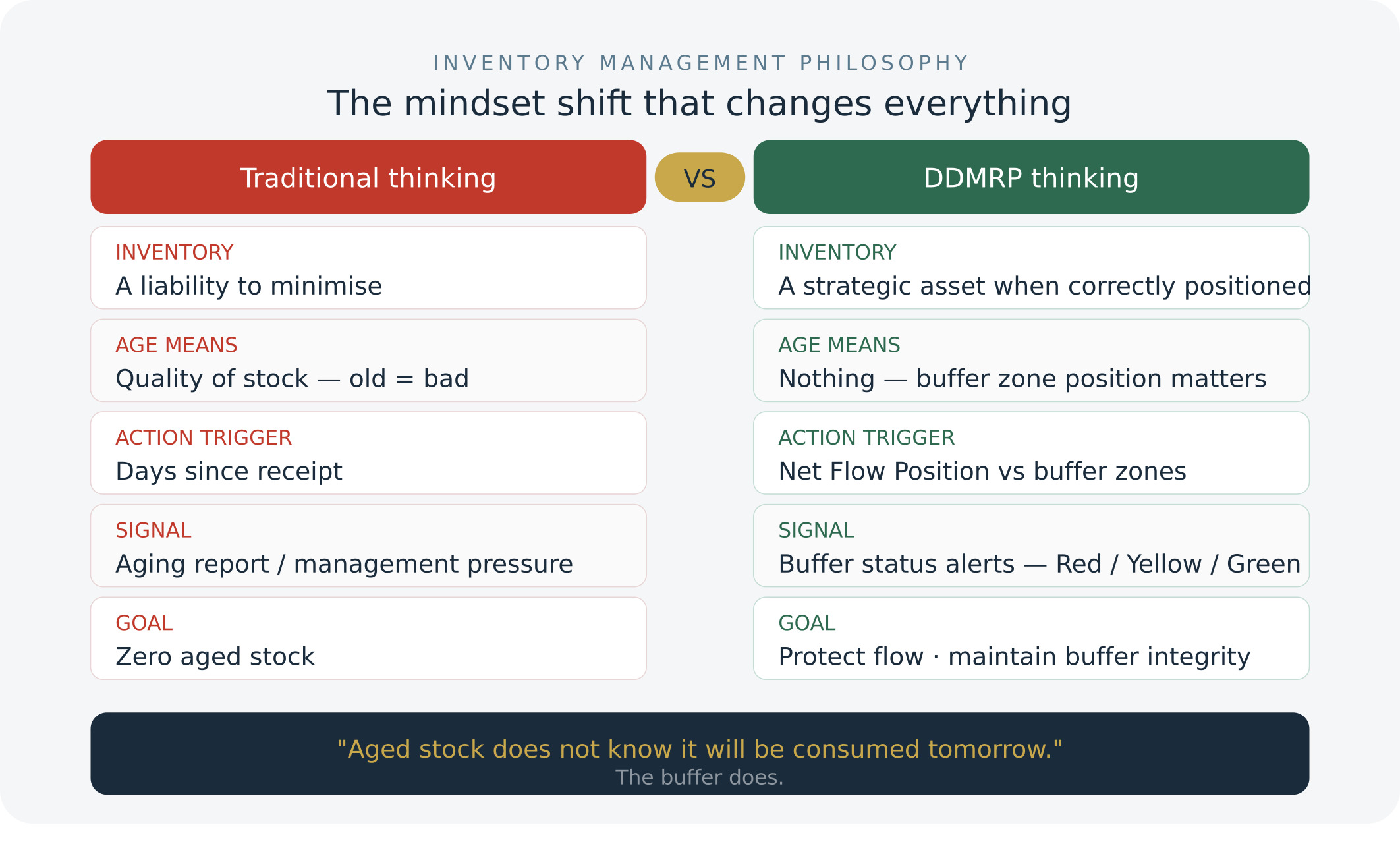
Traditional thinking treats inventory as a liability. DDMRP treats it as a strategic asset when correctly positioned.
Before acting on aged stock — check the buffer.
“`